Friday, 18 October 2013

Is competition a sin?

I suspect I’ll receive one of four answers to this question:
Of course it is you heartless Tory! – (Most on the left)
Of course not you hippy communist! – (Most on the right)
Of course it is you hippy communist! – (Those in the 1%)
Oh, so you think you know the answer you smug [expletive]! – (Everyone else)
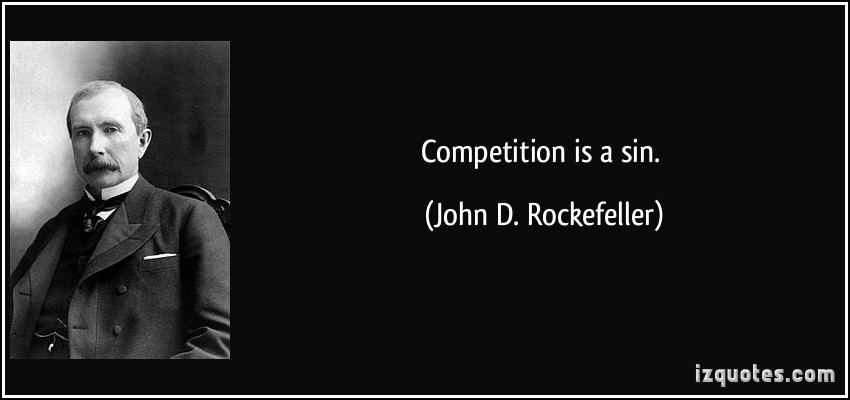

The reason why I raise this issue is because it has skirted around the independence debate for quite some time.  There have been numerous warnings from those in the ‘no’ campaign that an independent Scotland would need to compete with the rest of the UK and, with our government selfishly acting in our interests, this will result in a race to the bottom that will hurt everyone, but is there any truth to this?

The short answer is, no.  Businesses are always competing, both domestically and internationally.  This won’t be changed by having decisions affecting Scotland being made in Scotland.  What will change is the increase in attention that Scottish brands will receive through our own consulates and trade missions, but that would only be a benefit to our economy (it’s a privilege which some of our companies are currently having to pay for).

Competition under the UK's current rules
Independence allows us to move away from the false choices of Westminster.  Business tax rates don’t need to be raised or lowered in ungainly blocks; they can be adjusted in various ways.  For example, we can set lower taxes for smaller businesses, look at the cost of water and electricity, change national insurance rates so that those companies who employ people in Scotland benefit the most, set tax rates and reliefs by industry and much, much more.  A ‘race to the bottom’ is simply not necessary.

Westminster can’t put Scotland first because most of the funding for its parties and the votes for its parliament are concentrated in the South of England.  They will not bring in the legislation or policies which Scotland requires if it will hurt their main interests.

Scotland's prospects if we were to vote 'no'
Independence means that we can bring in the laws that benefit us, whilst the rest of the UK can have what suits them.  No racing is required and there will be more opportunities for our businesses to shine abroad.  That is the best of both worlds (and it doesn’t require any more sin!)
Drew

If you like this blog, then please consider visiting our other sites:
Facebook - Sign for Scotland
YouTube - Sign4Scotland
Twitter - Sign4Scotland

Saturday, 12 October 2013

It's Great To Be Different

According to a study entitled ‘The Psychology of Voters in Elections’ by Michael Bruter and Sarah Harrison, the 4th most common thought experienced by voters in a polling booth is ‘vote of the rest of the country’.  It’s a thought that more than 60% of people have before finally placing an 'x' onto their ballot.  Only ‘Responsibility’ (78.8%), ‘Possible Prime Ministers’ (66.6%) and ‘Constituency Candidate’ (65.4%) were more frequently considered, and two of them won’t even be relevant in the independence referendum.
  
The term ‘vote of the rest of the country’ is, for all intensive purposes, a form of peer pressure.  If you believe that a certain side will win, you will want to back that side to fit in with the crowd.  If it was the right decision then you can share in the credit, and if it was wrong, well, at least you weren’t alone.  You don’t need to consider the issues and you don’t even need to accept much responsibility.  After all, you just followed what others were doing…


But you should consider the issues.  It doesn’t matter if someone else is claiming that every normal person is bored and that you should be too...you don't need to be like them.  You don’t need to pander to the laziness or misgivings of others.  You can state what you think and research what you don’t know.
 
I’m going to vote Yes in 2014.  I'll do it because, after looking over the evidence so far, that is what I believe to be right for the people who call Scotland home.  I don’t care if others will agree or disagree with me, I don’t care if I’m the only one who takes part, I only care in staying true to my beliefs and convictions.


Even though I have always in one way or another supported independence, I used to be quite shy about it.  It's hard to come out into the open and state clearly what you believe in.  There's a fear of being stigmatised, of being mis-understood, of being looked at differently by those you know, of being accused of hating others and simply searching for someone else to blame.
 
And sometimes those things do happen, but they are born from the ignorance of others.  I know that I'm not looking to blame anyone, I just want the future to be better, and believe that making decisions for ourselves is the best way to achieve that.  And by letting others know, I hope it will make them more open to a new way of thinking.

One of the most important things in life is to trust in your own judgement, and to not worry yourself with what others do.  The majority of people might disagree, but I don’t want to follow the crowd to somewhere I don't want to go.

I want to walk my path.

And, having the certainty that I won't be swayed by the baseless impressions of others when I complete my ballot, I can honestly say, it’s great to be different.
Drew

If you like this blog, then please consider visiting our other sites:
Facebook - Sign for Scotland
YouTube - Sign4Scotland
Twitter - Sign4Scotland

Sunday, 6 October 2013

Why Lib Dems should support Independence

In 2010 the Liberal Democrats created a manifesto which was popular enough to earn 23% of the vote in that year’s UK general election.
 
It contained many ideas which resonated with voters.  A mansion tax for properties worth over £2 million pounds, protecting civil liberties, preventing the renewal of Trident, breaking up the banks, setting the minimum wage to the same level for all workers over 16, replacing council tax with a local form of income tax, voting rights for 16 year olds, a fully elected second chamber, a written, codified constitution and the phasing out of taxes on learning (also known as tuition fees).

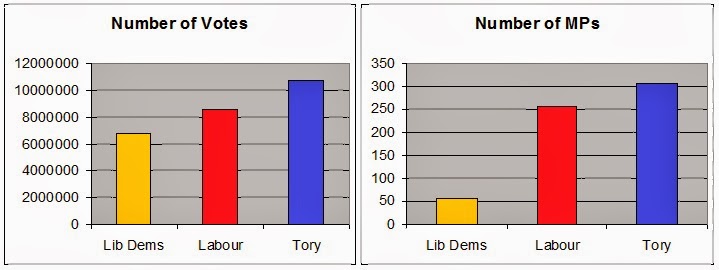
You just can't win at Westminster if you aren't New Labour or Tory
Unfortunately, despite holding the balance of power at Westminster, the vast majority of these reforms were neutered or lost.  Tuition fees trebled where they were in place.  VAT was increased despite liberal MPs campaigning for it to remain low.  The mansion tax was replaced by a tax cut for millionaires.  Average wages plummeted as the promised equalisation of the minimum wage was quietly forgotten.  Support for the party diminished.
 
So why did so many of these policies fail to materialise?
Dramatisation
The system at Westminster is extremely resistant to change.

The powers that be who are in charge of the two major parties made sure that the status quo was protected.  Trident was going to be renewed.  The ‘too big to fail’ banks were going to maintain their influence.  Funding local authorities with a tax based upon ability to pay was going to be blocked.  Measures enhancing workers rights were going to be denied.  The unelected House of Lords was going to be protected.  Higher education was going to be taxed and a written constitution that would hold those in power to account was never going to be created.
We think this is a dramatisation...
 
Some blame Nick Clegg, the Liberal Democrat leader, for limiting his party’s ambitions and thus dulling the popular support necessary to enact change.  I feel that he is simply a realist.  He knew that wholesale change of Westminster wasn’t possible and thus aimed to enact all the reforms that he could.  But at Westminster that isn’t a lot.
 
So what does this have to do with Scottish Independence?  In Scotland we have a more proportional alternative.  Since our parliament was reconvened in 1999, we have seen Labour, the SNP, the Conservatives, the Liberals and even the Green Party hold the balance of power in various votes at different times.  The frequency and significance of these events have coincided with the support each party has held, meaning that greater popular support has translated to greater ability to enact change.
 
Is this really the union want you want to protect?
Look again at the list featured at the top of this blog.  Would any of them be impossible in an independent Scotland?  Could we not have tax reform?  Could we not guarantee civil liberties with a codified constitution?  Is it impossible for us to reform the banking sector, or ensure that an honest day’s work receives and honest day’s pay, or have a fully elected parliamentary system?  Would we be paying for military bases in over 80 countries, taking part in illegal wars or funding weapons of mass destruction?  Would any of these policies make a party unelectable in Scotland?
 
Westminster needs a jolt if it is ever to reform and Scottish Independence can provide that.  We can lead by example and prove that the ‘good cop, bad cop’ routine that New Labour and the Conservatives engage in doesn’t have to be the only way.  We can inspire more people to get involved in how their country is run and ensure that special interest groups and party donors don’t dictate policy.
 
The Liberal Democrat manifesto of 2010 had no chance of winning Westminster, no matter how many people voted for it.  But it could win in Scotland…if we’re independent.
Drew
 
If you like this blog, then please consider visiting our other sites:
Facebook - Sign for Scotland
YouTube - Sign4Scotland
Twitter - Sign4Scotland